Epoxy Photo Lamination — crystal-clear finish, no bubbles, no plastic film.
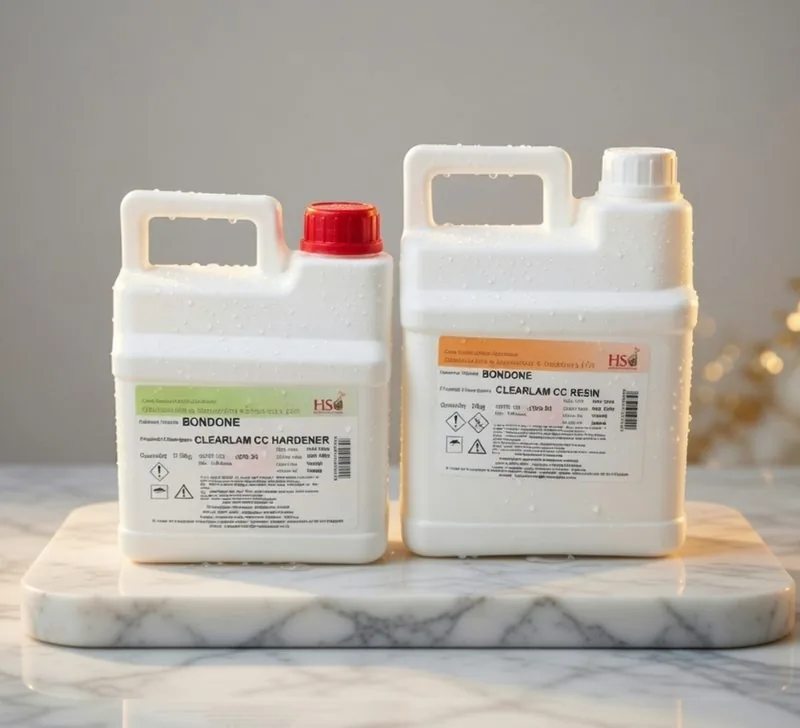
Seal photos, prints, and decoupage under a glass-like layer of epoxy — coasters, wall art, trays, and keepsakes. As of October 2026, the Bondone ClearLam CC 1.5 kg kit is ₹796 incl GST, covering roughly 70 square feet at 1 mm.
Epoxy Photo Lamination Key Facts
Which epoxy resin is best for photo lamination in India?
Bondone ClearLam CC by DCM Shriram is the resin for photo lamination — a 2:1 mix by weight, 45–60 minute pot life, tack-free in 4–6 hours, with 2H scratch hardness. Deep-pour resins like Bondone Clear Cast generate too much heat for a thin coat and will wrinkle your print.
How much does it cost to laminate a photo with epoxy?
1.5 kg of ClearLam CC covers roughly 70 square feet at 1 mm — about 150 coasters or 30 A4 prints — and the kit costs ₹796 incl GST, as of October 2026. That works out to under ₹27 per A4 print or ₹8 per coaster in resin.
Can I use deep-pour casting resin for photo lamination?
No, deep-pour resin generates too much heat in a thin coat and will wrinkle or scorch the paper. Use a thin-coat, self-levelling laminating resin only — that's what ClearLam CC is designed for.
Which Epoxy Resin to Use for Photo Lamination?
Not all epoxy is the same. Industrial and deep-pour resins are too reactive for a 1-2 mm coat over paper — you need a low-viscosity, self-levelling laminating resin.
Bondone ClearLam CC
₹796The photo lamination workhorse — 2:1 mix by weight, 45–60 min pot life, self-levelling thin coats, 2H scratch hardness, tack-free in 4–6 hours.
Clear Cast UV Stable
₹732Choose this for photo pieces that sit in direct sunlight — it blocks yellowing from UV. 3:1 mix, 280–340 min pot life, great for topcoats.
Bondone Clear Cast
₹690Not for thin lamination — it generates too much heat and will wrinkle paper. Keep it for river tables and thick castings where its 300–370 min pot life shines.
How to Laminate a Photo or Print with Epoxy
Five steps between you and a crystal-clear keepsake. Take your time on step one — every failed piece I've seen traces back to an unsealed paper.
Seal the Photo or Print First
The most critical step. Inkjet prints absorb resin like a sponge — you MUST seal the paper. Lightly spray with acrylic clear coat (₹150 a can) and let dry for 20 minutes, or brush a very thin layer of mixed resin and let it cure for 2 hours. Skip this and the photo turns dark and translucent. I ruined a customer's wedding photo in 2022 by skipping this. Never again.
Mix the Resin Precisely
Place a mixing cup on your digital scale and zero it. Add 100 g of Part A (resin), then 50 g of Part B (hardener) — 2:1 by weight. Stir slowly for 3 minutes, scraping the sides and bottom. Don't whip — that adds bubbles.
Apply Epoxy to the Surface
Place the sealed photo on your level surface. Pour resin directly onto the centre — for a coaster, 10–15 g is enough; for an A4 print, 40–50 g. Spread gently with a stir stick or silicone brush; the resin self-levels within a minute.
Remove Bubbles
Pass a heat gun slowly over the surface, 6–8 inches away. Bubbles pop instantly. Keep the gun moving — don't overheat. In humid Indian summers bubbles appear more; work in an air-conditioned room if possible.
Cure
Cover with a dust cover (an upside-down cardboard box) and leave for 24 hours. For maximum hardness, once tack-free (4–6 hours), oven-cure at 60–70°C for 30 minutes — this makes the surface glass-hard. I do this for every commercial coaster order.
Safety warning: always wear nitrile gloves when handling uncured epoxy. Repeated skin contact can cause allergic reactions over time. Work in a ventilated room. Once fully cured, epoxy is completely inert — safe for coasters, trays, and incidental food contact.
What Photo Lamination Actually Costs
One 1.5 kg ClearLam CC kit does a whole batch of coasters or prints. Per-piece cost, worked out honestly, as of October 2026:
| Piece | Resin Used | Resin Cost | Per 1.5 kg Kit |
|---|---|---|---|
| Coaster | 10–15 g | ₹5–8 | 100–150 coasters |
| A4 print | 40–50 g | ₹22–27 | 30–37 prints |
| 1.5 kg ClearLam CC kit | 2:1 mix by weight | ₹796 incl GST | ~70 sq ft at 1 mm |
Prices valid until 31 March 2027. For bulk pricing on 7.5 kg kits, WhatsApp Jobin directly.
Ready to Start? Order Your Lamination Kit
Si Epoxy Adhesives supplies Bondone ClearLam CC pan-India from our Ghaziabad warehouse. WhatsApp us your quantity and we'll confirm dispatch.
Order your lamination kit
WhatsApp Jobin directly. He will confirm stock, share the batch details, and arrange PAN India dispatch — usually within 1–2 business days. Makers in Delhi and Ghaziabad can collect kits the same day — see the Delhi resin delivery guide and the Ghaziabad resin delivery guide for pickup and delivery details.
WhatsApp JobinSee the full catalogue
All products with pack sizes, mix ratios, pot life, and prices — one page, nothing hidden.
Browse All Products