How to Fix Cloudy Epoxy Resin — Fix or Replace?
9 in 10 cloudy epoxy cases are fixable — the fix is sand, clean, and re-pour a flood coat. As of October 2026, these are the rescue steps and prevention rules we use in our Ghaziabad workshop and across 500+ Indian projects since 2018.
5 Causes of Cloudy Epoxy Resin
Every cloudy pour I have troubleshot in 8 years traces back to one of these five causes. Humidity alone accounts for the majority of Indian cases, especially during monsoon.
High humidity — most common
Above 80% relative humidity, moisture migrates into the curing epoxy and creates a milky white haze. This is the #1 cause we see in customer support, especially during monsoon (June–September) in NCR, Mumbai, and coastal areas.
Moisture in wood or mould
Unsealed wood contains natural moisture that rises into the epoxy and creates cloudiness. This is common in river table projects where beginners skip the seal coat.
Incorrect mix ratio
Too much or too little hardener stops full cross-linking, leaving a cloudy, sometimes rubbery cure. Always weigh by weight with a digital scale. See our mixing ratio guide.
Low temperature during cure
Below 15°C epoxy cures very slowly, and the extended cure time allows more moisture absorption. Delhi winters (December–January) are a common culprit. See our temperature & pot life charts.
Expired or poorly stored hardener
Hardener stored above 40°C (common in Indian summers) degrades and loses reactivity. The epoxy may not cure fully, resulting in a cloudy or sticky finish.
of surface cloudiness is fixable
causes cover every case we see
lost on my own cloudy river table
years troubleshooting cloudy pours
What Works, What Doesn't, What Depends
As of October 2026, these are the success rates we record from customer rescue cases at our Ghaziabad workshop. Match your cause to the row before you start sanding.
| Cause | Can You Fix It? | Fix Method | Success Rate |
|---|---|---|---|
| Surface moisture / amine blush | Yes | Sand with 400–800 grit, wipe with isopropyl alcohol, re-pour thin flood coat | 90% |
| Moisture in wood | Depends | Sand off completely, seal wood with shellac or epoxy seal coat, re-pour | 60% |
| Incorrect mix ratio | Depends | If surface only — sand and recoat. If fully cloudy — discard, start fresh | 40% |
| Low temperature cure | Yes | Move to warm area (25°C+), wait 7 more days. If still cloudy, sand and recoat | 70% |
| Expired hardener | No | Full replacement required. Check hardener expiry before mixing | 0% |
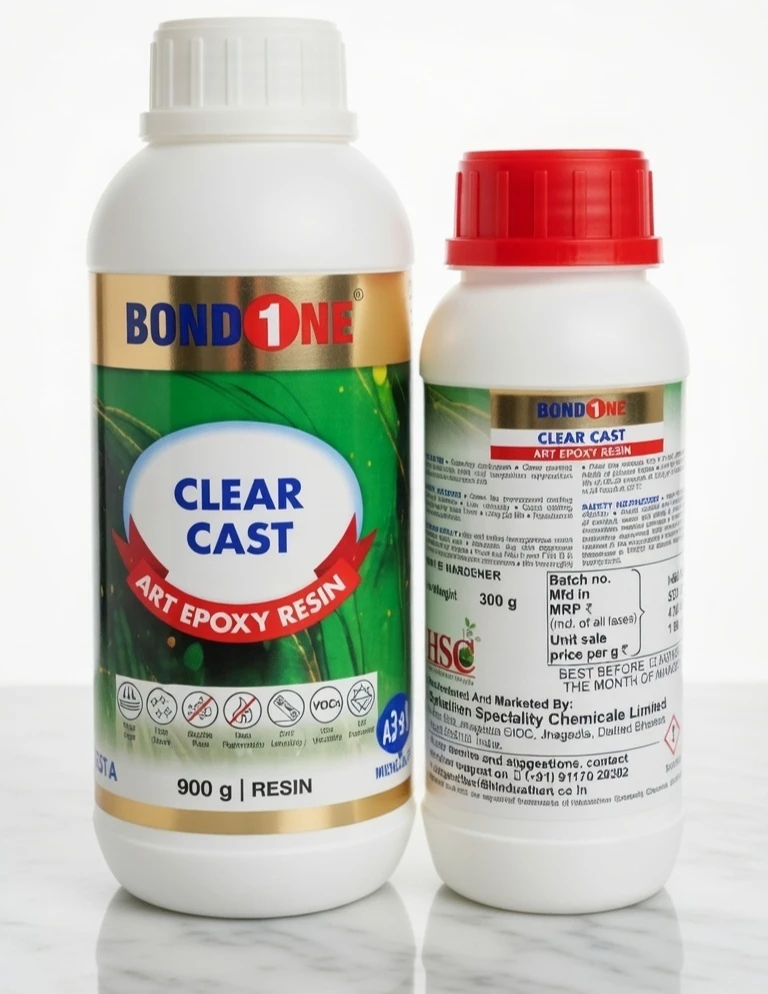
Key insight: The single most fixable cause is surface moisture and amine blush at 90% — and it is also the most common. The single least fixable is expired hardener at 0%, which is why we stamp the open date on every bottle. See the manufacturer data sheets on Bondone Clear Cast and Bondone Clear Cast UV Stable.
How to Fix Cloudy Epoxy — Step by Step
These six steps fix surface cloudiness, which covers 9 in 10 cases. For deep cloudiness, use the options below instead.
For surface cloudiness (most common)
Wait 72 hours
Make sure the epoxy is fully cured before sanding. Attempting to fix uncured epoxy creates a sticky mess.
Sand the surface
Start with 400 grit wet/dry sandpaper, progress to 800 grit, then 1200 grit. Sand until the cloudiness is gone and the surface is uniformly matte.
Clean thoroughly
Wipe with isopropyl alcohol (91% or higher) on a lint-free cloth. Let it dry completely and do not touch the surface after cleaning.
Check humidity
Ensure the workspace is below 70% RH. If it is above, run a dehumidifier for 2 hours before proceeding.
Re-pour a flood coat
Mix a fresh batch using the correct ratio by weight and pour a thin 1–2 mm layer. Spread evenly with a silicone spatula.
Cover and wait
Use a dust cover or box over the piece and let it cure 24–72 hours. The new layer bonds to the sanded surface and restores clarity.
For deep cloudiness (full piece)
If the cloudiness runs through the whole piece, the chemical bond has failed. Sanding and recoating won't help because the cloudiness will reappear. Two options:
Thin pieces — remake
Jewellery and coasters: discard and remake. A 100 g coaster costs about ₹80 in material — not worth salvaging.
Thick pieces — test the depth
River tables: sand down 2–3 mm from the top. If clear epoxy appears underneath, recoat with a flood coat. If still cloudy throughout, the piece may be unsalvageable.
Not sure which cause you have?
Send me a photo on WhatsApp and I will diagnose whether it is surface haze or a failed chemical bond before you spend time sanding.
Send a Photo →Best Bondone Products for Crystal-Clear Results
Not all epoxy is created equal. For projects where clarity matters most — river tables, jewellery, art pieces — these three are what we recommend and stock in Ghaziabad.
Bondone Clear Cast
₹690 / 1.2 kgDeep pour capable up to 2 inches per layer with a 370-minute pot life. Best for river tables and large castings where clarity matters.
Clear Cast UV Stable
₹732 / 1.2 kgSame clarity with UV resistance — won't yellow in sunlight. Best for jewellery, coasters, and sun-exposed pieces.
Bondone ClearLam CC
₹796 / 1.5 kgFast cure with a 45-minute pot life, perfect for thin castings and lamination work that needs quick demold.
Frequently Asked Questions
Why is my epoxy resin cloudy?
Most common cause: high humidity (above 80% RH) during the pour. Other causes: moisture in wood, incorrect mix ratio, low temperature during cure, or expired hardener.
Can I sand cloudy epoxy to make it clear?
Sanding alone won't restore clarity. You need to sand (400 → 800 → 1200 grit), clean with alcohol, and re-pour a thin flood coat of fresh epoxy. The new layer fills micro-scratches and restores transparency.
Does humidity affect epoxy curing?
Yes. Above 80% RH, moisture competes with the curing reaction and the surface turns milky. Above 85% RH, the epoxy may never achieve full hardness or clarity.
Can I fix cloudy epoxy without sanding?
No. You must remove the cloudy surface layer. Sanding is the only way to expose fresh epoxy for the new flood coat to bond to.
How long should I wait before fixing cloudy epoxy?
Wait at least 72 hours for full cure. Attempting to fix uncured epoxy will deform the piece and create a sticky, unsalvageable mess.
Can cloudy epoxy be fixed after 1 year?
Yes, as long as the epoxy is fully cured. Sand the surface aggressively (start with 200 grit) to remove the degraded layer, clean with alcohol, and re-pour a flood coat. The old epoxy provides a stable base.
Does cold epoxy get cloudy?
Epoxy poured below 15°C is at high risk of cloudiness because the slow cure allows more moisture absorption. Always warm bottles and workspace to 25°C+ before pouring in winter.
Is cloudy epoxy still usable?
For structural projects like floor coatings, slight cloudiness doesn't affect strength. But for decorative pieces — river tables, jewellery, art — cloudiness is a defect that must be fixed.