How to Make an Epoxy River Table — the complete DIY guide for India.
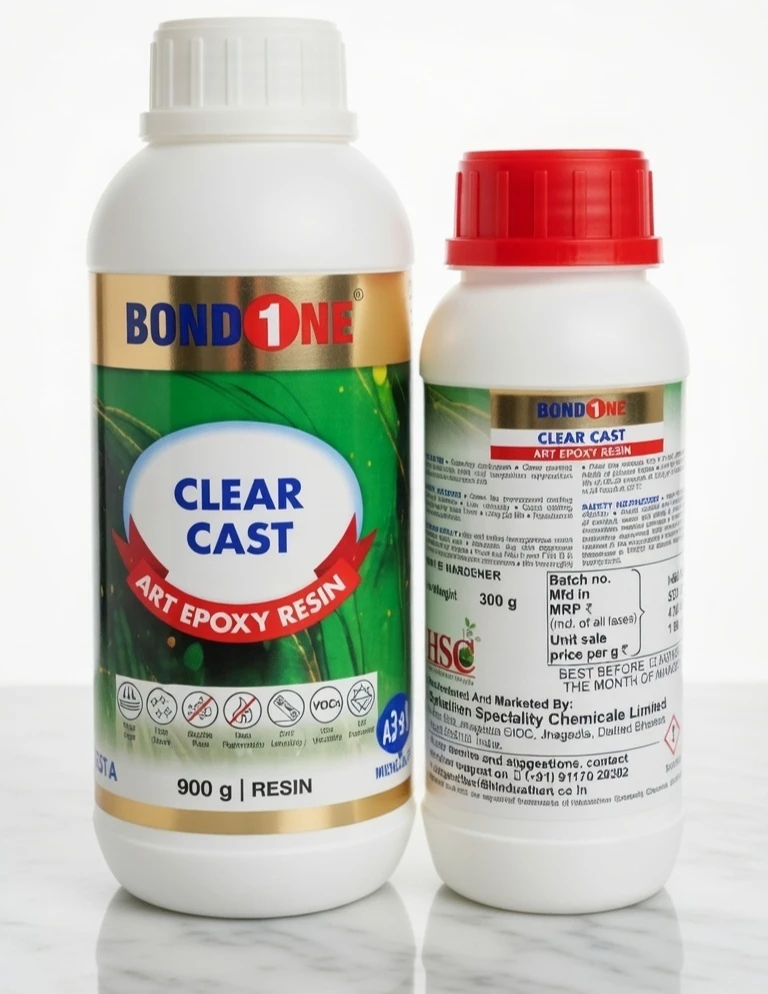
Epoxy river tables have become one of the most popular furniture projects in India — and the entire process, from selecting sheesham slabs to the final clear pour, can be done with materials available locally. This guide walks through every step: choosing the right wood, building the mould, mixing Bondone Clear Cast at 3:1, and finishing to a crystal-clear surface. As of October 2026, a 1.2 kg starter set is ₹690 and the 12 kg set — enough for a full 6 ft table — is ₹6,200 incl GST from our Ghaziabad warehouse.
River Table Key Facts
Which epoxy resin is best for river tables in India?
Bondone Clear Cast from Si Epoxy Adhesives is the best epoxy resin for river tables in India. It has a long pot life of 300–370 minutes, delivers a crystal-clear finish, and achieves a Shore D hardness of 75–80. Available from ₹690 for a 1.2 kg starter set with pan-India delivery.
How much does it cost to make a river table in India?
8000 to 12000 rupees for materials on a standard 6 ft table: Bondone Clear Cast 12 kg at ₹6,200, wood slabs at ₹1,500–₹3,000, mould materials at ₹500–₹1,000, and consumables at ₹500–₹1,000. Labour is additional if hiring a professional. Prices as of October 2026.
How long does the whole build take?
5 to 7 days from start to finish: seal coat cures 6–8 hours, main pour 48–72 hours to demould, sanding and finishing another day, and full mechanical hardness after 7 days at 25°C.
Materials You'll Need
Everything on this list is available locally in India — most of it from a hardware store plus one epoxy order.
- Two live-edge wood slabs — sheesham, teak, mango, or acacia (locally available in India)
- Bondone Clear Cast epoxy resin — 3:1 ratio, long pot life, crystal clear
- Melamine-coated MDF or plywood — for building the mould
- Silicone sealant — to seal mould joints
- Epoxy pigment or alcohol ink — optional, for coloured rivers
- Digital weighing scale — essential for accurate mixing
- Mixing containers and wooden sticks
- Orbital sander + sandpaper (80 to 3000 grit)
- Heat gun or butane torch — to remove bubbles
- Nitrile gloves and safety goggles
River Table Cost in India — Real Breakdown
| Item | Cost |
|---|---|
| Bondone Clear Cast 12 kg kit | ₹6,200 |
| Wood slabs (sheesham/teak) | ₹1,500 – ₹3,000 |
| Mould materials (MDF + silicone) | ₹500 – ₹1,000 |
| Consumables (sanding, gloves, pigment) | ₹500 – ₹1,000 |
| Total material cost | ₹8,931 – ₹11,431 |
Prices as of October 2026. Labour for professional application is additional — typically ₹200/sq.ft for sanding, polishing, and finishing. A standard 6 ft table takes 5–7 days from start to finish.
How much does an epoxy river table kit cost in India?
12 kg of Bondone Clear Cast costs ₹6,200 as a river table kit, and the 1.2 kg set costs ₹690. A 4 ft x 2 ft river table needs 12–15 kg, so budget ₹8,931–₹11,431 for all materials. Professional application adds roughly ₹200/sq.ft on top.
Common Beginner Mistakes to Avoid
- Wet wood: Always check moisture content. Wet wood is the #1 cause of cloudy epoxy in India.
- Wrong mixing ratio: Always measure by weight, never by volume. Even a small error causes a sticky, uncured river.
- Pouring too deep in one shot: Pours deeper than 25 mm generate too much heat and can crack or yellow. Always pour in layers.
- Not sealing the mould: Any gap in silicone will cause a leak. Check every joint before pouring.
- Sanding too soon: Wait a full 48 hours before demoulding and at least 72 hours before sanding.
- Working in high humidity: If you see a white haze on the surface, humidity is too high. Work in an air-conditioned space.
- Skipping the seal coat: Not sealing the wood edges causes bubbles to rise through the main pour.
Ready to Start Your River Table?
Si Epoxy Adhesives supplies Bondone Clear Cast epoxy resin pan-India. WhatsApp us with your project details and we'll help you calculate exactly how much resin you need. River-table builders in Ghaziabad and Delhi NCR can pick up the same day from our Mohan Nagar warehouse — see the Ghaziabad resin delivery guide and the Delhi resin delivery guide for delivery details.
Get the resin and the plan
WhatsApp Jobin directly. He will confirm stock, share the Clear Cast TDS, and help you size the kit for your table dimensions.
WhatsApp JobinSee the full catalogue
All products with pack sizes, mix ratios, pot life, and prices — one page, nothing hidden.
Browse All Products